AFTRS celebrates NAIDOC Week with students and the community, honouring the rich history and achievements of Aboriginal and Torres Strait Islander peoples. This year marks 50 years of NAIDOC Week, celebrating First Nations voices and culture. The theme, ‘The Next Generation: Strength, Vision & Legacy,’ honours past achievements and empowers young leaders to carry forward community vision and legacy.
Australian screen culture has been shaped by fundamental contributions from AFTRS alumni, including Rachel Perkins, Warwick Thornton, Catriona McKenzie, and Ivan Sen, who are part of a strong community of screen practitioners bringing knowledge and experiences to our shared screen culture.
This story is part of a series of three articles featuring the works of 2024 AFTRS graduates Dylan Nicholls and Nazareth Alfred, along with current student Charles Perkins, through the lens of ‘strength, vision, and legacy’ as we look to the future of the next generation.
Dylan Nicholls’ truth-telling approach in his documentary, Bringing His Spirit Home, enriches our understanding of Australian culture: “Looking back on different historical events in Australia and looking at them through a First Nations lens and honouring those stories that have been forgotten,” is how Dylan described his approach.
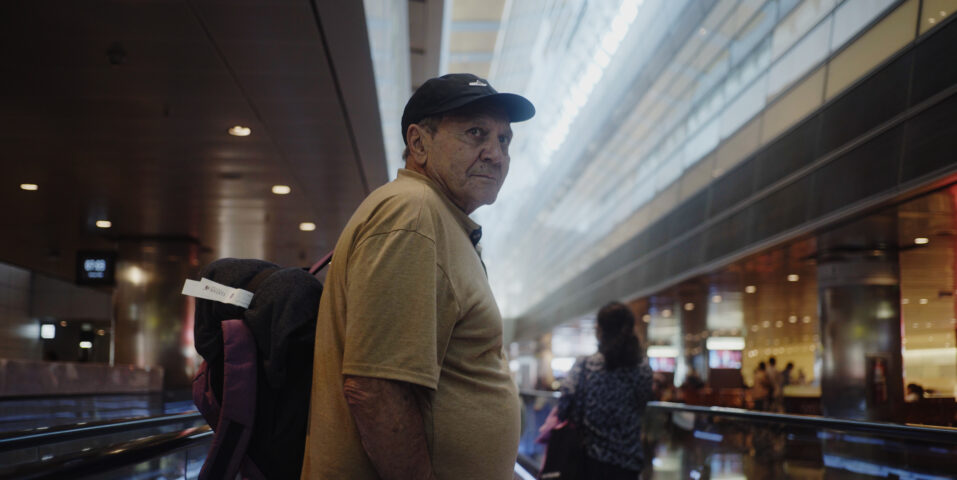
Bringing His Spirit Home, brings to screen the story of Gomeroi man William Allan Irwin DCM, a First Nations soldier who fought during World War I, blending family history, community voices and creative storytelling, the film sheds light on the contribution of First Nations servicemen.
To honour his ancestor, Peter Milliken travelled to France to perform a traditional ceremony and share the experience with his family, transforming grief into strength, “despite what happened to William and to Indigenous people, we can still use our culture and our identity as a way to empower ourselves, our families, and our communities,” said Dylan about the film, made as part of his Master of Arts Screen: Documentary course.
Directed and produced by Dylan, with producer Sophia Carolyn Wallace, cinematographer T. Oxford, and editor Jack Charter – all AFTRS students at the time – Bringing His Spirit Home had its world premiere at the Sydney Film Festival and the shoot took Dylan and Peter to France, where William became the first soldier in history to be named an honorary citizen of France’s Somme region, more than a century after his death.
When considering the next First Nations generation Dylan reflected on the complexity of truth telling and reckoning with the past, “the more you look in the past people think ‘we have nothing to do with that‘. It was our great-grandparents and our great-great-grandparents, ‘why should we even care about this?‘ And the longer time passes, the more that attitude potentially can get worse.”
“One approach is to just tell our stories as Indigenous people for ourselves. To express our culture and not care about what anyone else thinks. But if the point is truth-telling to educate non-Indigenous people on the impact that colonisation had on the loss of culture and intergenerational trauma for Indigenous people, drawing on an historical narrative such as the Anzac story can be a helpful way to explore these ideas,” said Dylan.
Bringing His Spirit Home was born of that desire to bring together different stories of the same history, “The Anzac Story isn’t something that needs a lot of explaining. You had people who served in that war and died for their country. There’s a lot of respect and commemoration for those people, regardless of their heritage and cultural background.”
“If audiences were previously not that interested in hearing about an Indigenous story, the Anzac aspect to the story can help open the door a bit for them to have that conversation, because they’re like, ‘I’m actually interested in that story because I have so much respect for anyone who’s died for this country’,” said Dylan.
Dylan believes the next generation will connect with their roots, “we’re seeing a lot more of our people reconnect with their culture and their languages. Kids learning traditional language in schools, that’s something really special.”
“The strength they have in their culture, learning about their history in schools, having pride in who they are, their culture and their identity. That’s something that’s going to help the next generation move forward and become our next leaders,” said Dylan.
Dylan graduated from AFTRS and was recently selected for the 4-month Indigenous Documentary Placement supported by the ABC and the Australian International Documentary Conference (AIDC).
His success embodies this year’s NAIDOC theme of strength, vision and legacy, and positions him among the bright talent to keep an eye out for as ‘the Next Generation’ of First Nations voices and culture.
