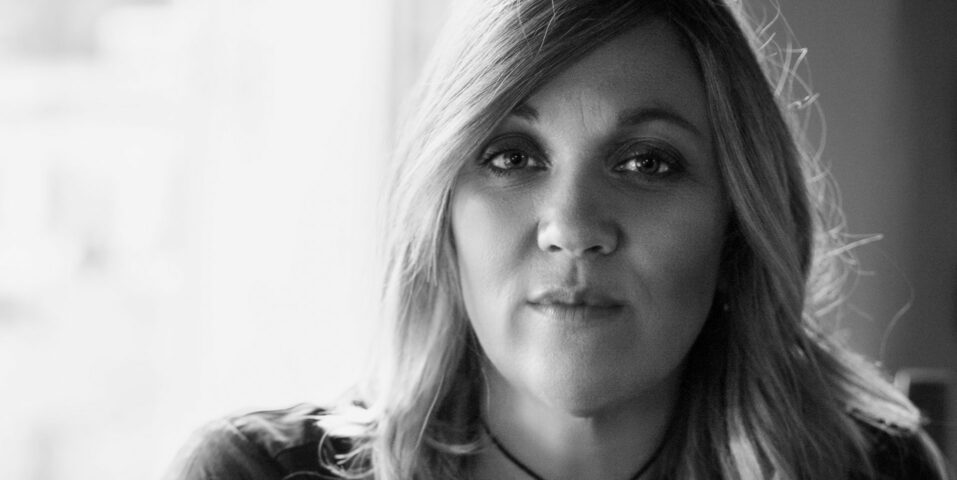
Master of Arts: Film & Television (Hons) — Production Design, 1999
Production designer Felicity Abbott is a graduate of both AFTRS (MA Hons) and the University of Auckland’s Elam School of Fine Art (BFA). A professional member of the Australian Production Design Guild, the British Film Designers Guild and the Art Directors Guild Local 800, Felicity has worked across the US, Europe, the Balkans, Australia and Aotearoa NZ, on a wide range of genre, period, film and television.
Recently, she received the Docklands Studios Melbourne award for Best Production Design at the 2025 Australian Production Design Guild Awards for her work on the SONY feature Tarot. Her latest work includes SONY feature The Invitation and Amazon Studios Don’t Make Me Go, both nominated for Best Production Design at the 2023 British Film Designers Guild Awards in London.
Australian credits include Ladies in Black, from director Bruce Beresford, and the period film, The Outlaw Michael Howe, for which she won Best Production Design at the APDG Awards in 2014, and Upgrade, directed by Leigh Whannell, for which she was nominated for Best Production Design at the 2018 AACTA Awards.
Felicity has worked extensively with producer Darren Dale and Blackfella Films and designed all three instalments of the groundbreaking series, REDFERN NOW, the first Australian drama written, directed and produced by Indigenous Australians and winner of the 2014 AACTA Award for Best Television Drama series. She collaborated with fellow alumna Rachel Perkins, notably on Mabo, about the life of Torres Strait Islander community leader Eddie Koiki Mabo and his epic fight for the legal recognition of traditional land rights, REDFERN NOW: Promise Me, and the celebrated feature, Bran Nue Dae.
Felicity is passionate about visual narrative, advocacy, mentorship and creative resilience. In recent years, she undertook further study to broaden her abilities, completing a post-graduate diploma in Art Psychotherapy and Community Arts at Metaforà School of Art Therapy in Barcelona, Spain.
From Aotearoa, Felicity descends from Māori iwi, (Te Whakatōhea, Ngāti Porou ki Hauraki), the Scottish Clan McGregor, and a long line of sea captains.
AFTRS HIGHLIGHT
My MA (Hons) thesis in collaboration with cinematographer Cordelia Beresford was a detailed investigation into the relationship between production design and cinematography. During the inaugural year of the MA Hons programme, we re-created Edward Hopper’s painting Chop Suey as a live-action set. Shot entirely on 35mm film under the guidance of Head of Design Stephen Curtis, production designer Michael Philips and cinematographer Geoff Burton, we took the set through numerous iterations of scenic treatment, lighting, stock and colour processes- with extensive testing and analysis throughout a four-month period. The knowledge gained during this extraordinary opportunity created the foundation for my work in the industry and continues to inform my craft to this day. My time at AFTRS was rich and dynamic and sparked an ongoing passion for the poetics of visual narrative and the relationship between light, colour and texture.
CAREER HIGHLIGHT
The complex creative challenges of BBC miniseries The Luminaries made it a significant project to design, with over 105 unique sets built from scratch to recreate the West Coast of the South Island during the gold rush of the 1860s. The absence of period-correct locations, carriages, boats and dressing available in New Zealand meant we had to build most of the settings, including the three-masted barque the Godspeed. We built the exterior of the ship, the quay and wharf set—including a customs yard, Victorian-era streetscapes, a rural township and numerous cottages, hotels and dwellings.
Creating the world of The Luminaries involved the construction of a broad range of architecture representative of 1860’s New Zealand: from English Gothic revival hotels to opium dens, weatherboard cottages to police camps. The design drew together diverse architectural styles to create an emotionally resonant connection to the past; from Chinese settlements constructed from organic materials such as stone, fern and mud to gold mining towns, tent encampments and cliff-top, bark flitch timber huts. It was a year-long journey to bring the novel to life, exploring the subconscious, memory and nostalgia using tone, style, palette and texture. I was honoured for the unique craft on this complex and challenging project to receive the New Zealand Television Award for Best Production Design in 2020.