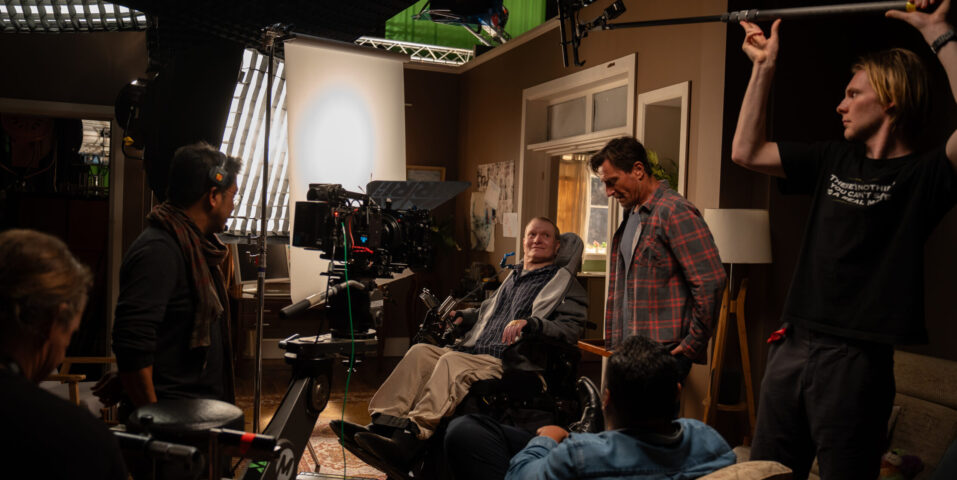
Today, 3 December, AFTRS joins the global celebration of the International Day of People with Disability (IDPwD), a United Nations-led initiative observed worldwide to promote awareness, understanding and acceptance of people with disability. The 2025 theme, Fostering disability-inclusive societies for advancing social progress, reflects a shared commitment to creating equitable opportunities and inclusive environments.
One year on from launching the Disability Action Plan 2024–2027, AFTRS is proud to report progress in embedding accessibility and inclusion across all aspects of the School’s operations. This work is central to AFTRS’ Creating the Future Strategy, ensuring the School is a welcoming and accessible space for staff, students and visitors.
The focus spans people, spaces, practice and engagement, from equitable employment and inclusive teaching to accessible physical and digital environments. Key achievements over the past year include: maintaining Disability Confident Recruiter status with the Australian Disability Network; delivering training in Inclusive Recruitment, Disability Confidence, and Inclusive Production; upgrading facilities such as handrails and adjustable desks; updating the website to meet Web Content Accessibility Guidelines 2.2 standards; and providing AUSLAN interpreters and access services for selected short courses.
In 2025, AFTRS also awarded the inaugural Dylan Alcott Foundation Scholarship to a student joining the Bachelor of Arts: Screen Production, part of our support to young Australians living with a disability or long-term illness to overcome the barriers to education and fulfil their creative dreams and goals.
AFTRS also continues its long-standing collaboration with Bus Stop Films, supporting accessible filmmaking programs since 2010. In 2026, Bus Stop will launch PLACES at AFTRS, an advanced, peer-led program designed to build leadership, advocacy, creative skills and employment pathways for filmmakers with disability.
DRIVING CHANGE
Ahead of IDPwD, AFTRS CEO Dr Nell Greenwood moderated a panel at Bus Stop Films’ Driving Change Summit 2025, featuring representatives from state screen agencies. The discussion focused on supporting disabled filmmakers and increasing disability representation in storytelling. Nell noted that while progress is being made, there is still work to do.
“Nearly 21 per cent of Australians live with disability, but according to the 2025 Screen Diversity Inclusion Network’s (SDIN) Everyone Report, people living with disability continue to be well under-represented in the screen industries on screen (12%) and behind the camera (6.8%),” Nell said.
“But let’s also focus on the good news. There is a sector wide commitment to increasing the number of disabled creatives in the industry, particularly in leadership and decision-making roles. From a survey of the 100 participants in last year’s Summit, 86% of respondents had knowingly employed a person with disability in the past, and 95% of those said it was a positive experience – and a further 92% of respondents are actively considering creating or have already created employment pathways for people with disability.
“This session is a great opportunity to hear from our fantastic screen agency reps about what they are doing to shift the dial on these numbers and support greater access and inclusion.”
Just a few of those initiatives include: agencies partnering on Screen Australia’s Access Coordinator Training program, which embeds access and inclusion professionals into productions; the Australian Government’s Arts and Screen Employment Pathways Pilot Program (launching 2026-7); Screen NSW’s Evolution from Screenability to Pathways Development Program, providing long-form career support for creatives with a disability; and Creatability – run by Create NSW, Screen NSW, Sound NSW and Accessible Arts – giving creatives with a disability a chance to intern in screen and arts organisations.
STUDENT & ALUMNI WORKS
AFTRS’ commitment to accessibility extends to productions on screen and on set. A standout example is the short film Rehabilitating, directed by Inez Playford, who joined AFTRS last year to launch the Disability Action Plan.
Rehabilitating is now streaming on SBS On Demand, airing from 3:10pm today as part of SBS’s IDPwD programming. The film premiered at Sydney Film Festival’s Screenability program, had its Melbourne premiere at St Kilda Film Festival’s Drama Showcase, and also screened at Flickerfest.
Gregory said he enjoyed his studies at AFTRS, particularly the friendships and collegial relationships, which he described as “the greatest asset you take with you”.
“When everyone contributes in their own way, the work becomes richer than anything that could come from a single person’s vision,” Gregory said.
“One of the great advantages of working in the studio is that wheelchair access is rarely an issue. When you are shooting on location, accessibility can become a major obstacle. Even if the location itself is technically accessible, the rooms often become impossible to navigate once you bring in lights, cameras, dollies and everything else. There have been many times when I have had to direct a scene from a remote monitor simply because I could not physically get into the space. In the studio, the ability to remove walls completely eliminates those barriers. It makes access a dream and allows me to work in the same way as everyone else. I particularly enjoyed experimenting with ‘the volume’ and exploring both its strengths and its limitations.”
Partially inspired by Gregory’s experience as a quadriplegic, Paralysis tells the story of Tom, who returns to his hometown after five years and must confront his estranged best friend and the wounds of their past. The film screened at Flickerfest’s Best of Australian shorts program, and at Sydfest and Newcastle International Film Festival.
Gregory is screening two films at Filmable, Paralysis and Culicidae, and he is the producer behind Fracture, which premiered internationally at the BAFTA-qualifying Aesthetica Short Film Festival and domestically at CinefestOZ. Fracture also won Gold in the Short Film category at the ACS NSW Awards.
