

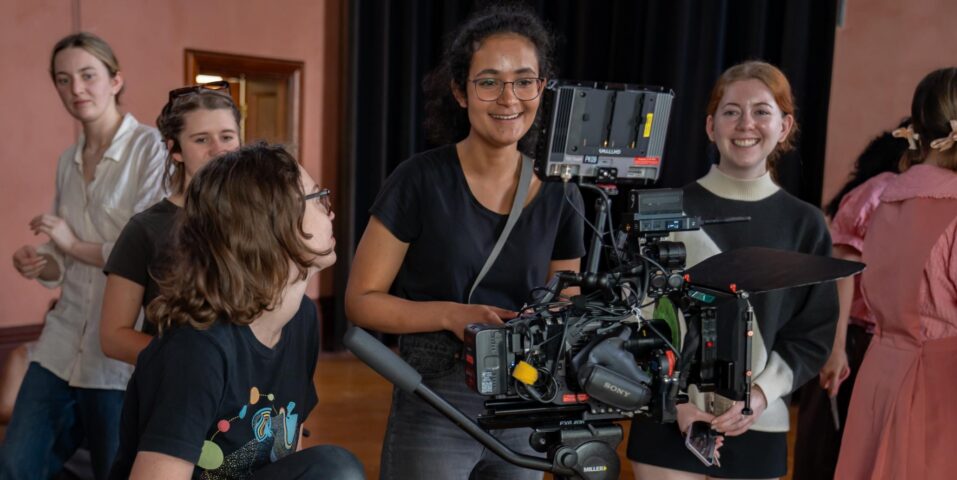
AFTRS is celebrating International Women’s Week by bringing together staff and students with representatives from WIFT NSW (Women in Film and Television) and screen-industry guilds to shine a light on the School’s sorority programs and broader opportunities available to women across the sector.
Reframing the Future* will highlight the work of the AFTRS’ three sorority groups – Cinematography, Sound and Directing – and the supportive networks they are fostering to help female and gender diverse students confidently develop their skills and creative voice.
We speak to program founder, Jackie Wolf, and three students who have benefited from being part of these communities.
Seven years ago Jackie Wolf (Lecturer Cinematography) and Simeon Bryan (Discipline Lead of Cinematography) identified the need for a space where female and gender diverse students could flourish and explore their skills with the right support and access to equipment.
And so the Cine Sorority was formed. Two years later, in 2021, BA Program Convenor Dr Marty Murphy recognised its value and brought full support to the program, making it “a fully-fledged program, to support students through the three years of the BA and through their productions,” says Jackie.
“There’s also some lectures where I do a bit of show and tell with some of the great foremothers of cinema. You can’t be what you can’t see. So it’s really wonderful to show them works of excellence by female cinematographers. It also comes with a side serve of consciousness raising about their own biases and some unpacking of any self-limiting beliefs they may have.”
The program proves important at this stage of learning, “seeing the transformation of these students from first year to year three, often starting out as timid and apologetic through to fully inhabiting their own skin and having this beautiful confidence in their own aesthetic and what they uniquely bring to the game. It’s everything,” says Jackie.
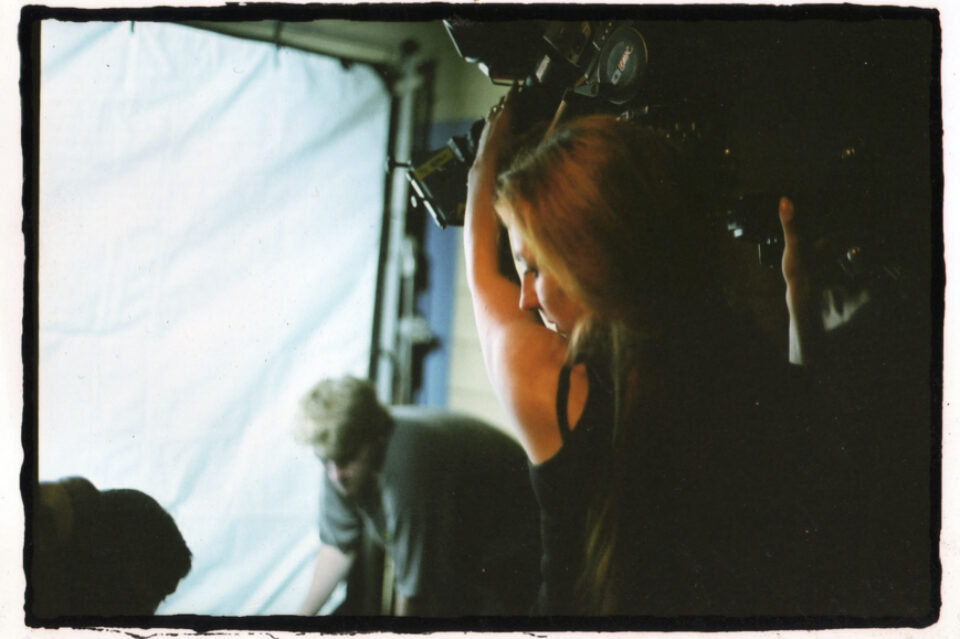
From cinema masters to camera tests, and a supportive environment to ask questions and help each other, students gain the confidence to develop a methodology they can carry forward to all productions.
“The key is to have them work through their scripts and treatments, to extract the questions they need to answer through camera testing in collaboration with their directors and production designers,” Jackie says.
“This is then followed by a session on how to analyse the results of the camera tests in order to devise a recipe so they can reliably execute the aesthetic of their project’s storyworld once standing on set.”
This support doesn’t end at pre-production. Students get continued attention when finishing the films, helping them through post-production with their colour grades and successfully taking them all the way from the very beginning through to the screening.
The number of female cinematographers lensing short films at AFTRS has seen an encouraging improvement, according to Jackie.
“In 2023, more than half of Year 3 graduation films were shot by women. And the work was just stunning,” she says.
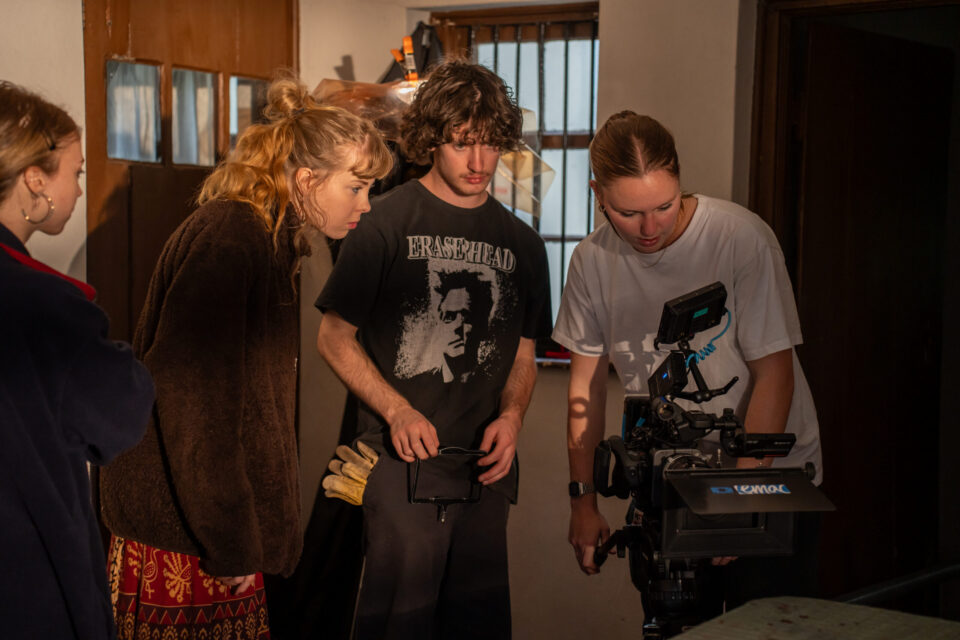
One of those films was For Joan, shot by Mia Schirmer, who graduated from the Bachelor of Arts Screen: Production in 2023, after being awarded the Sony Women in Cinematography Prize for the work done with the film.
“I was able to use my time at Cine Sorority to complete camera tests for my graduation film at AFTRS with one-on-one support from Jackie, as well as AC Jubilee Chan,” Mia says.
“Jackie emphasised the importance of working closely with the production designer and pushed us to complete thorough camera tests with aspects of the intended design, including props, fabrics, different textures, and colours. This was an incredible experience to have access to the time and resources to make this happen, and I have taken this in-depth pre-production process with me into my commercial career.”
Hiruni Dharmasena graduated in the same year as Mia and is currently working as technical support at AFTRS, along with freelance roles in the camera department. The Cine Sorority played a pivotal role in building her confidence, she says.
“I had never put a camera into manual mode till I came to AFTRS, so I did it for the first time in cine sorority with Jackie.”
Unlike some of her classmates who did photography in High School, Hiruni came from a background in the sciences, which prepared her for the abstract thinking required in this role but left her needing time with equipment for visual exploration.
Hiruni remembers the moment when these ways of thinking converged with Jackie posing a riddle involving light meters: “My brain was thrown into a bit of a frenzy. But I solved it, and Jackie and I had this moment where we looked at each other, and we realised that somehow a bunch of bits and pieces had all clicked in, and it’s like a switch was flipped.”
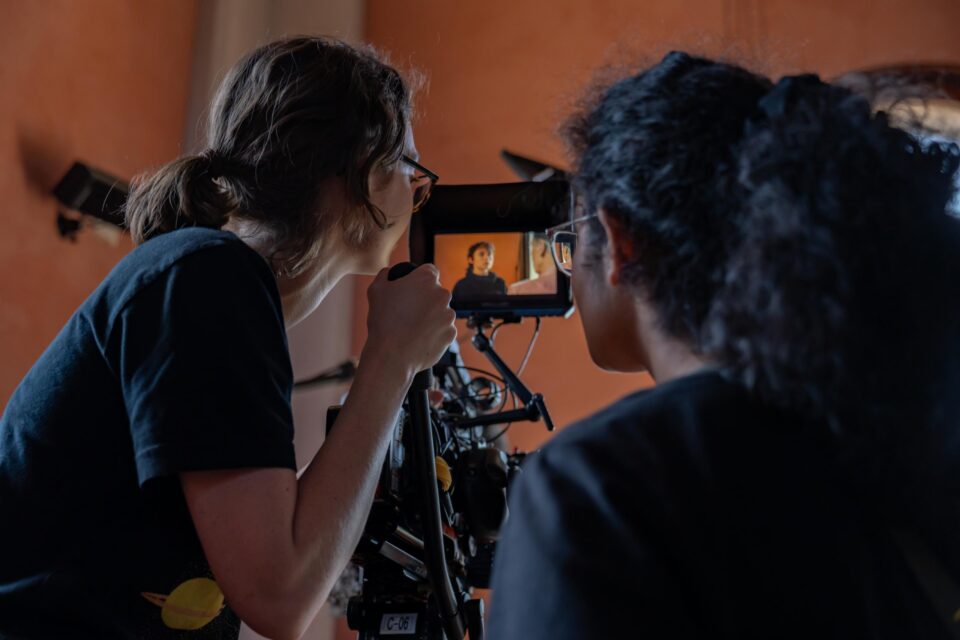
One of the students present in last year’s Cine Sorority was Arden Kelly, who graduated from the Bachelor of Arts Screen: Production in 2025. When Arden joined AFTRS, she knew she wanted to work with camera.
“At 19, I had never actually met a cinematographer, but my love of photography and film had propelled me deep into a fascination with the world of cinematography and the camera department,” she says. “From what I could glean from the outside, it was an incredible, exciting world – but one that seemed lacking in women.”
She kept her focus on the work of female cinematographers and got to work, immediately joining the Cine Sorority in Year 1 to overcome her ingrained biases and sharpen her technical, methodological, and creative skills.
“From my first Cine Sorority meeting, I began to unravel the myriad of unhelpful, untrue, and frankly ridiculous beliefs about myself and my capacity to truly engage in the thing I love most,” says Arden. “This, combined with studying the astonishing work of women cinematographers throughout history, was the antidote I didn’t know I needed but am incredibly grateful for.”
From AFTRS to industry
The incentive for collaboration and the creation of a supportive network is one of the big outcomes of the Cine Sorority.
“It’s a team sport. It’s called the Cine Sorority because one of the program’s aims is to develop a sense of sisterhood,” Jackie says.
Transitioning from studying to working in the industry can still be a challenge: “ We still haven’t hit critical mass when it comes to it, in a true gender equity in cinematography.”
According to Jackie the relationship between school and industry is reciprocal; she believes that “we have the opportunity to try and nudge the culture into a new direction”.
Currently working in the industry, Mia says that the “Cine Sorority played a massive part in building my confidence as a cinematographer”.
This is something that is echoed by Arden.
“I feel privileged to have had this experience alongside other women, to have watched them develop their craft and create such beautiful work. I’m happy to say that now, at 23, I see the world of cinematography and camera departments as one full of remarkable women.”
*Reframing the Future, hosted by AFTRS in partnership with WIFT on Tuesday 10 March, brings together members of the Sound (Bethany Stewart) and Directing (Leah Pellinkhof ) Sororities alongside Jackie Wolf. This panel will explore how the sororities are creating meaningful opportunities for women and non‑binary students, echoing UN Women Australia’s call to “Balance the Scales”. Representatives from WIFT Australia and screen industry guilds will also join the discussion, highlighting the broader industry support for emerging, established and re-established talent. Discussions will include innovation and education, access to leadership, opportunities and networking.
