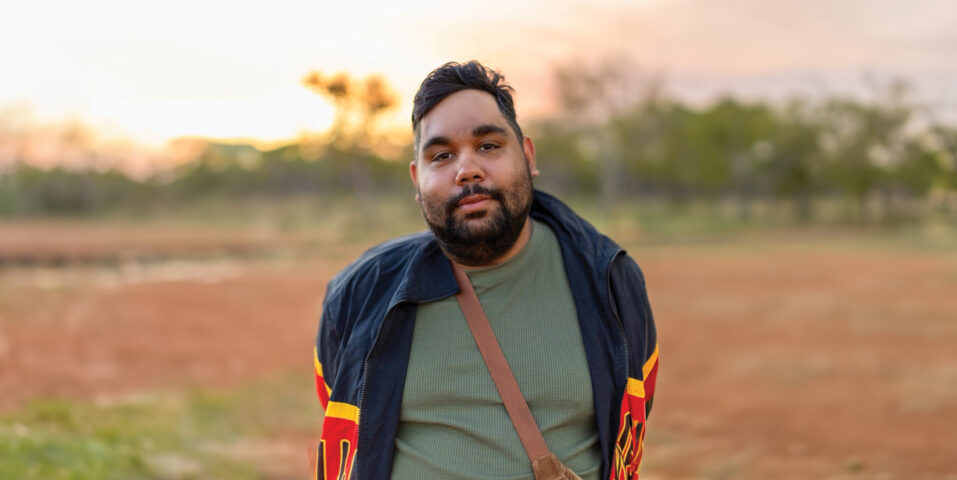
First Nations peoples have been the stewards of story, memory and knowledge of this continent for more than 65,000 years. This year’s NAIDOC Week theme, “Fifty Years of Deadly”, celebrates the Elders and communities who keep culture and dreaming alive, share it with younger generations and into the public sphere.
In the spirit of NAIDOC Week, we look at how the On Country Pathways Program (OCPP) is shaping the journey of First Nations creatives who were part of the program. Supported through the Australian Government’s National Cultural Policy, Revive, the OCPP was established by AFTRS to provide world-class training on Country to remote and regional communities, enabling accessible pathways into the screen and audio industries.
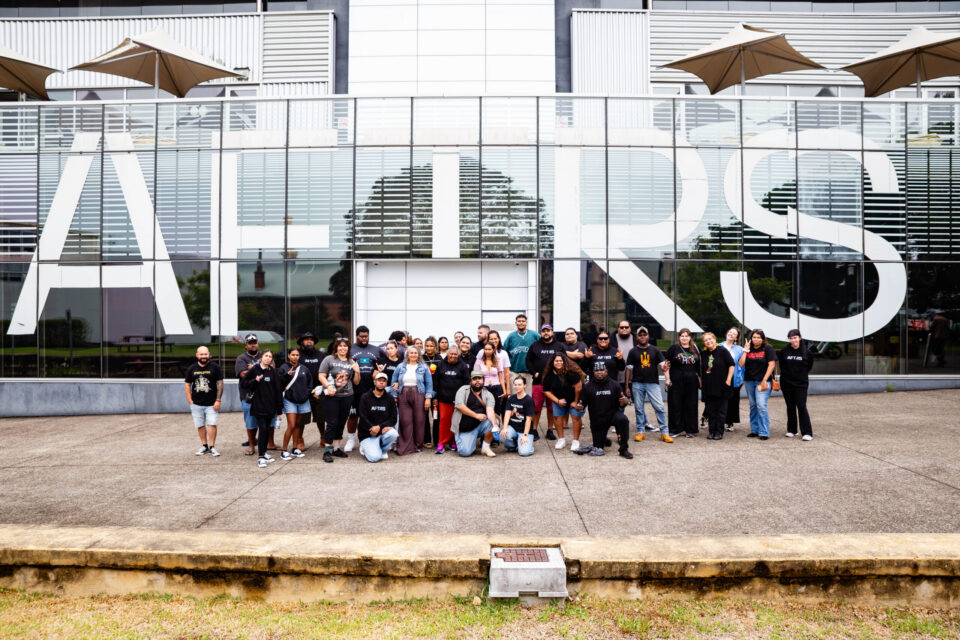
Following workshops in Western Australia, Queensland and New South Wales, OCPP brought First Nations creatives from across Australia to Gadigal land (Sydney) in January this year. This final program combined cultural protocols with masterclasses from leading First Nations creatives and intensive workshops in screenwriting, podcasting and filmmaking, culminating in a showcase of works created during the week.
Across this series of stories, participants shared how the program supported their individual creative journeys and how their experiences reflect a broader shift in which access, confidence, and connection are opening new pathways into the industry.
More than 110 First Nations creatives received hands-on training through OCPP, each bringing stories that connect communities and reach future generations. Behind every participant is a story, a creative voice shaped by culture, lived experience and connection to Country.
Reflecting on one year of impact, Kerrod Meredith-Creed, Community Pathways Officer at AFTRS and a key coordinator of the program, emphasised that opportunity has long been the barrier for many First Nations creatives.
“Talent has never been the issue. Opportunity has,” he said.
“For many participants, this was their first experience of professional creative training. For others, it was the first time their lived experience, cultural knowledge and creative voice were recognised as valuable.”
For Kerrod, that recognition is central to the program’s impact. It is not only about developing technical skills, but about creating culturally safe environments where participants can explore their ideas and feel confident in their voice.
“It was an opportunity not only to learn new skills, but also to express themselves, preserve culture, and share stories that might otherwise never have been heard,” he said.
“Most importantly, for many participants, it was the first time somebody looked at them and said, ‘Your story matters’.”
That sense of validation is echoed across the participant stories, such as Merindi Schrieber expanding her storytelling practice from song to screen, Tyrell Viti finding confidence in his voice through podcasting, and Casey Meager discovering new pathways into filmmaking.
The program’s focus on taking training directly into communities and on to Country is key to its impact. Rather than requiring participants to leave behind family, culture and connection, OCPP has created space for learning within those contexts.
“If opportunity is not reaching community, then opportunity must travel to community,” Kerrod said.
This approach not only increases access, but strengthens the cultural foundations of creative work. It ensures that stories remain grounded in lived experience, language and community knowledge, he said.
Gaining new perspectives and confidence has already led to tangible outcomes: “The impact has already begun to emerge. Participants have secured industry attachments. Participants have stepped into professional writers’ rooms. Emerging podcasters have advanced their projects toward funding and development opportunities.”
For many, these opportunities represent a significant shift, moving from seeing the industry as distant or inaccessible to recognising it as a space where they belong.
But as Kerrod emphasises, the program’s success cannot be measured solely by outcomes.
“The investment made in one participant does not stop with that participant,” he said. “It creates impact within families, communities and future generations.”
This ripple effect is already evident, according to Kerrod, noting that participants return to their communities with new skills, share knowledge with others, strengthen local initiatives and inspire future storytellers.
“One storyteller becomes many,” Kerrod said.
At its core, OCPP is about self-determination: ensuring First Nations creatives have the tools, confidence and opportunities to tell their own stories on their own terms.
“It is about shifting the narrative,” Kerrod said, “from participation to leadership, from representation to ownership, from access to empowerment.”
Looking to the future, the program’s impact extends beyond the stories being told today. It is reflected in the stories yet to be written, filmed and shared by a new generation of creatives.
These are the next “Fifty Years of Deadly”: a future where stories from remote communities and cities alike are told in their own voices, where culture and creativity continue to grow together, and where First Nations storytellers shape the national conversation.
After the workshops end, the stories continue to grow as voices find their strength, communities acknowledge themselves reflected on screen, and emerging creatives see there is a place for them in the industry.
