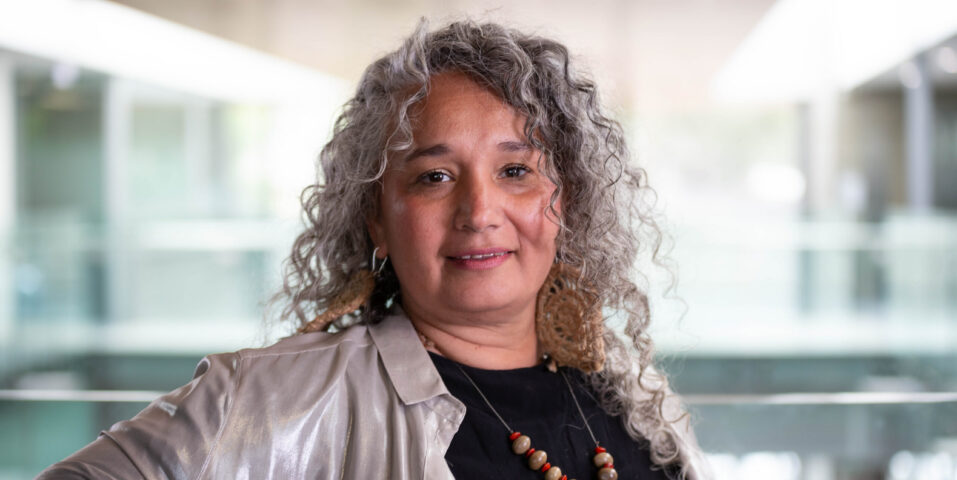
First Nations peoples have been the stewards of story, memory and knowledge of this continent for more than 65,000 years. This year’s NAIDOC Week theme, “Fifty Years of Deadly”, celebrates the Elders and communities who keep culture and dreaming alive, share it with younger generations and into the public sphere.
In the spirit of NAIDOC Week, we look at how the On Country Pathways Program (OCPP) is shaping the journey of First Nations creatives who were part of the program. Supported through the Australian Government’s National Cultural Policy, Revive, the OCPP was established by AFTRS to provide world-class training on Country to remote and regional communities, enabling accessible pathways into the screen and audio industries.
Following workshops in Western Australia, Queensland and New South Wales, OCPP brought some of the First Nations creatives from across Australia to Gadigal land (Sydney) in January this year. This final program combined cultural protocols with masterclasses from leading First Nations creatives with intensive workshops in screenwriting, podcasting and filmmaking, culminating in a showcase of works created during the week.
We spoke to three OCPP Gadigal participants – Merindi Schrieber (screenwriting), Tyrell Viti (podcasting) and Casey Meager (filmmaking) – about how the OCPP has shaped their creative practices. This story is one in a series of three, each focusing on a different participant’s experience.
Merindi Schrieber: From song to screen
With a background in songwriting and performing, Merindi has long been connected to culture and language. She lives and works from Gimuy (Cairns), and has deep ancestral roots in Kubirri (Mossman, NQ).
Over time, and rediscovering story through the perspective of her children, that connection has evolved into writing stories for children, allowing her to engage directly with young audiences across the Cairns region.
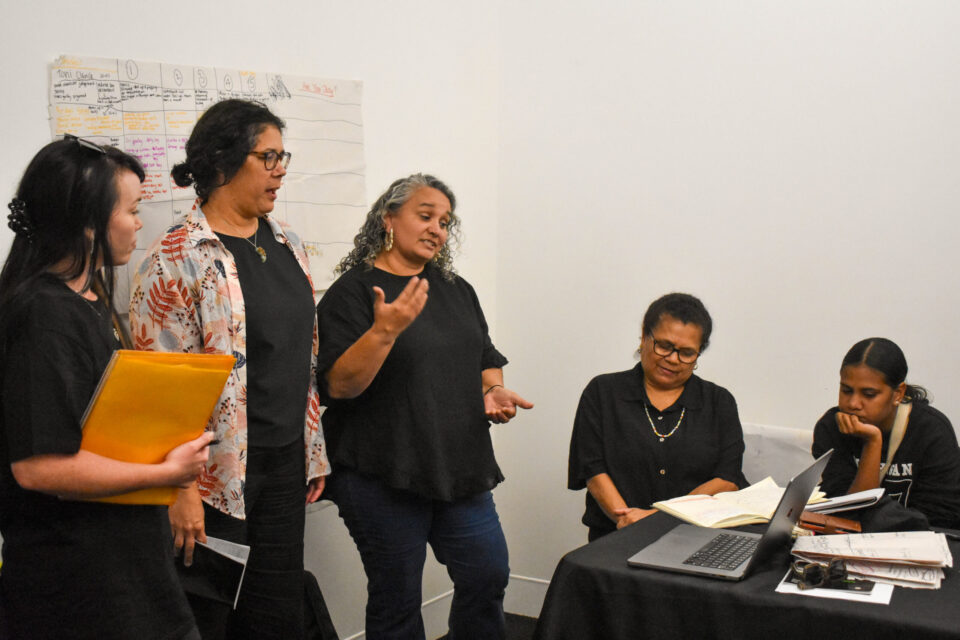
Seeing how children respond to these stories gives her work meaning. “The kids have really gravitated to each of those stories, little beautiful yarns with songs attached, and yarns that have embedded messages for all,” said Merindi.
One of her earliest stories is now going on tour for a live performance scheduled this year. “We’re heading down to Brisbane for a children’s story on stage. I went from songwriting to storytelling to stage – and now to screen,” said Merindi, who joined the OCPP with this extra step in mind – initially in Cairns.
“I’d love to eventually put these stories to screen, whatever that might be,” she said. “But I think [the OCPP has] given me that drive to really look at developing those stories and putting them on screen for everyone else to enjoy and embrace.”
The screenwriting stream was the perfect fit for Merindi, enabling her to utilise her skills in a different context.
“It was just such a great experience because I’ve always worked solo. [The OCPP] really gave me the opportunity to look at how a bigger-picture thing happens on screen. There is a whole mechanics behind it, a whole core team of different mobs that have these different expertise to make magic happen,” she said.
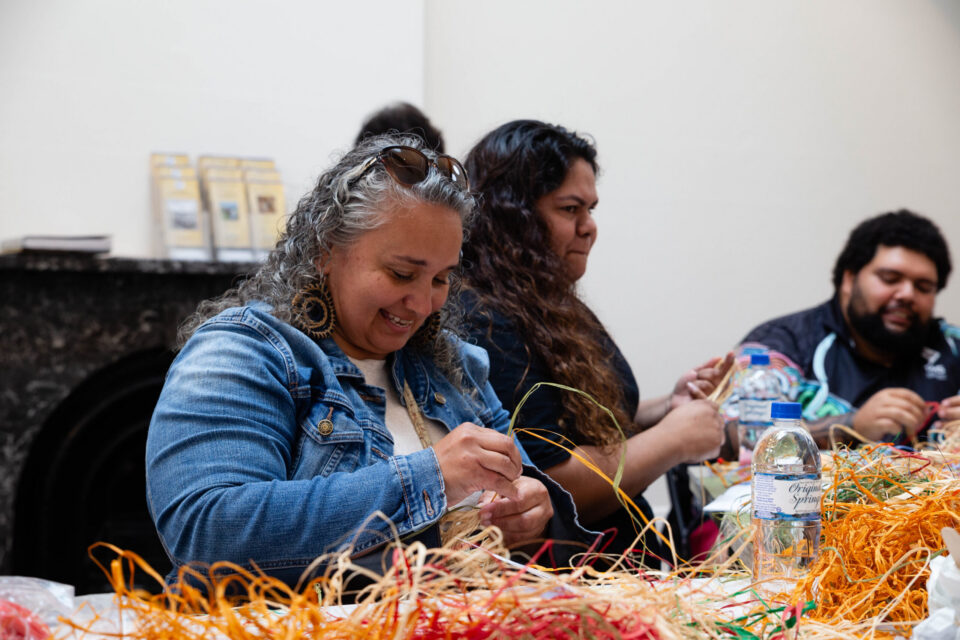
This insight into collaboration broadened her understanding of how stories are realised at scale.
The OCPP’s structure fostered a shared creative focus, bringing together participants with different experiences and perspectives.
“Having First Nations mob come together … AFTRS really helped create a safe space for us to feel like we can actually be ourselves without being judged. I think it was beautiful to have those moments where we could collaborate and have some free discussions, being open,” Merindi said.
“So it was a beautiful, gentle space to be warmed into it and look at these ideas and things that are actually achievable, with the right people and support around you, you can make it happen.”
Merindi created close creative relationships through the program, one of which was with Kerstin Roe, with whom she wrote a love story that might one day come to life on screen as a feature or a series when the two creatives meet half-way, coming “from different sides of the world”, said Merindi, as Kerstin lives in Broome, Western Australia.
“The most beautiful thing about the whole process was just that friendship and connection that was created just in us two alone as the creatives. And just having that common heart, to talk about a love story,” said Merindi.
Despite differences in age and experience, their connection became foundational to their work together. “Making that connection first was so important for us to be able to grow that story from there,” Merindi said. “And I think that is how we roll, and I’m not sure about the whole industry as a scope, but as First Nations, we’re all about relationships and making spaces of trust.”
The experience at Gadigal Week also prompted a broader creative realisation. “It was an opening of possibilities that made me feel like we don’t have to be in this little box. We are human too, we’re not just Indigenous. We have all the stories in the world,” said Merindi.
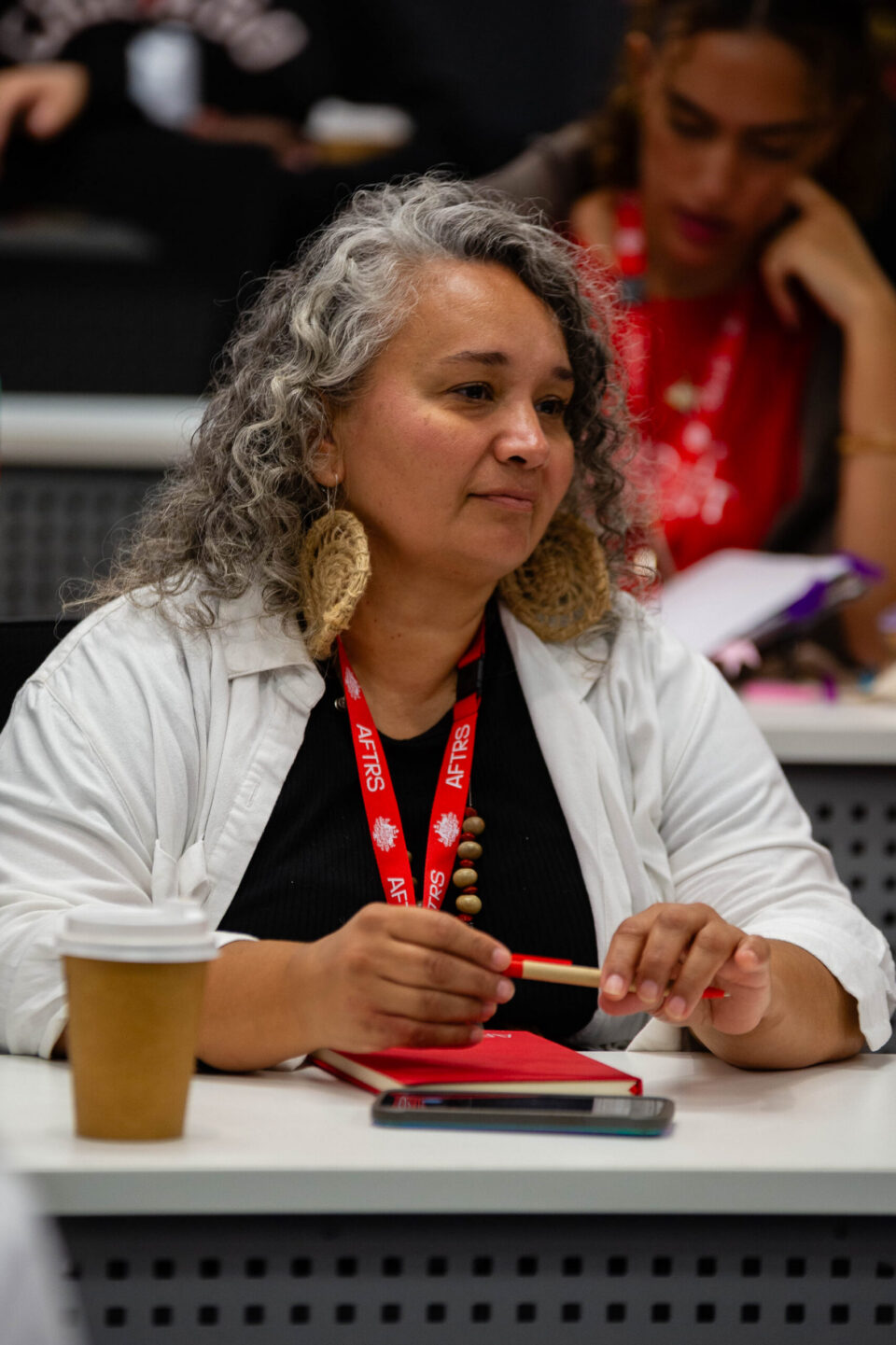
Since completing the program, Merindi has pitched to Screen Queensland and met commissioners from SBS, Binge, Stan and Paramount.
“I think it just gave me the opportunity to step into that space; it was just that next little journey. After AFTRS, it’s like, ‘OK, this is what it is about’,” she said.
Merindi sees creative practice and cultural expression as deeply interconnected and in need of sustained support and visibility.
“It’s about creating more spaces, for these deadly moments to happen, for this creativity, for our truths to be told in a creative way,” she said.
This includes long-term opportunities that extend beyond individual projects: “Launches of cultural-connected activities, and whether that’s through theatre or film, just having those spaces that are year-in, year-out, where we’ve got really solid employment in the industry, in the creative industries, as opposed to just moment to moment.”
