First Nations peoples have been the stewards of story, memory and knowledge of this continent for more than 65,000 years. This year’s NAIDOC Week theme, “Fifty Years of Deadly”, celebrates the Elders and communities who keep culture and dreaming alive, share it with younger generations and into the public sphere.
In the spirit of NAIDOC Week, we look at how the On Country Pathways Program (OCPP) is shaping the journey of First Nations creatives who were part of the program. Supported through the Australian Government’s National Cultural Policy, Revive, the OCPP was established by AFTRS to provide world-class training on Country to remote and regional communities, enabling accessible pathways into the screen and audio industries.
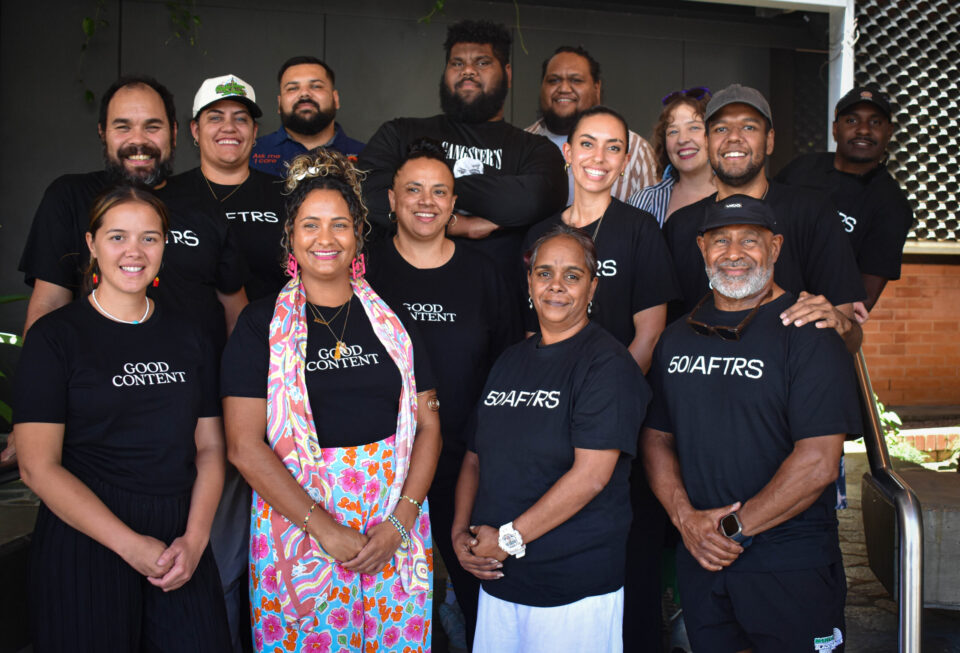
Following workshops in Western Australia, Queensland and New South Wales, OCPP brought some of the First Nations creatives from across Australia to Gadigal land (Sydney) in January this year. This final program combined cultural protocols with masterclasses from leading First Nations creatives with intensive workshops in screenwriting, podcasting and filmmaking, culminating in a showcase of works created during the week.
We spoke to three OCPP Gadigal participants – Merindi Schrieber (screenwriting), Tyrell Viti (podcasting) and Casey Meager (filmmaking) – about how the OCPP has shaped their creative practices. This story is one in a series of three, each focusing on a different participant’s experience.
Tyrell Viti: A new generation of story
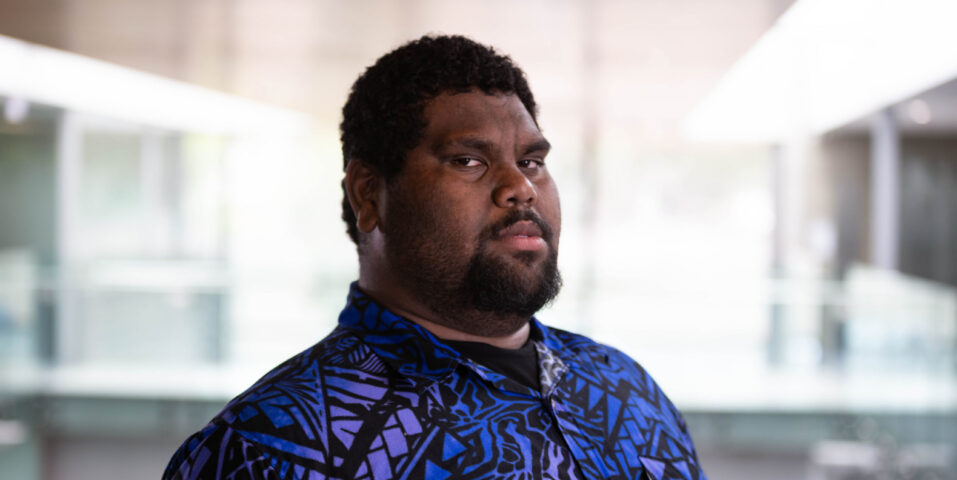
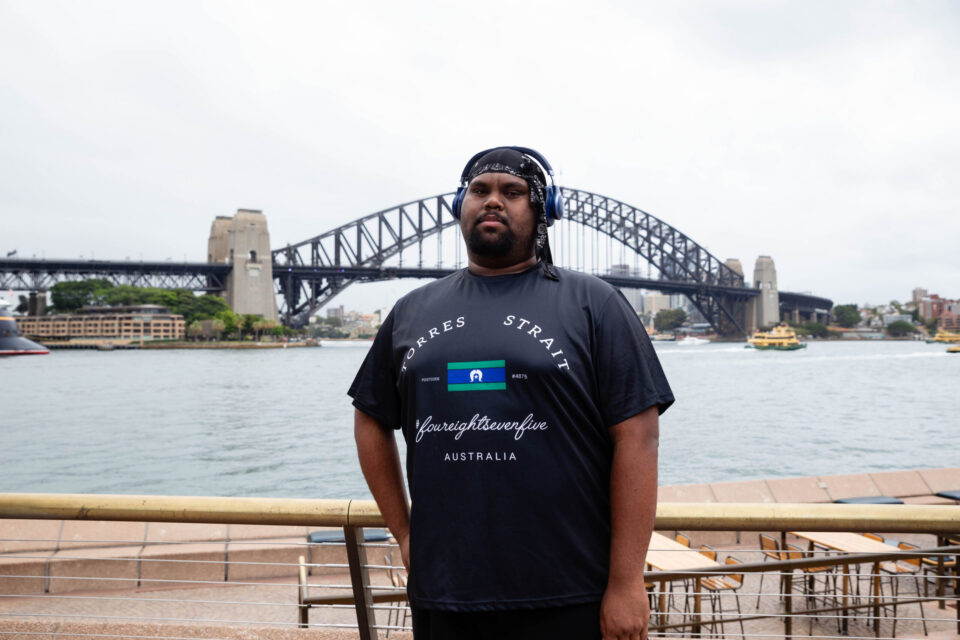
Tyrell joined the OCPP in Cairns as the youngest participant in his group. From Thursday Island in the Torres Strait, he brought experience in community radio at TSIMA (Torres Strait Island Media Association), as well as blog writing and social content creation. While he had already begun developing a voice within his community, the program offered an opportunity to extend his skills in a more focused and supported environment.
“It was just kind of cool,” the 18 year old said of the OCPP. “It made me feel like there was more to offer. It showed how much there is out there for us. And there are people who want to help you get there. And I got to take a bit of that knowledge back home with me to my community, share my experiences,” said Tyrell.
A key feature of the OCPP experience is its practical approach, which allows participants to work directly with equipment, mentors and real-world formats.
“It pushed me to my creative limit at times,” Tyrell said, adding that it provided consistent support throughout the process.
As part of the program, Tyrell developed a sample podcast aimed at young audiences, focusing on representation and voice.
“I really wanted a podcast that talks to us in a good way, because I feel like we’re always getting spoken for, but we are not the ones speaking. So I really wanted a podcast where we can highlight youth voices unfiltered to really know what we’re thinking,” he said.
Working in podcasting also shifted his perspective on his own performance and communication.
“It was like that constant pressure to be perfect, but not realising that podcasts are meant to be true, unfiltered, non-scripted,” Tyrell explained. “And that’s what I found healing to me, because I feel like I’m always needing to be perfect. With what I say, how I say it, and then hearing Dre (OCPP trainer) tell me, ‘Your first one was perfect the way it was.’ Yeah, it was deadly.”
The open, creative environment of the program also contributed to that shift, according to Tyrell.
“Being in a space where there was no limit to my creative level, that’s what I found really comforting. We could just be in a space with all these ideas floating around, with all this knowledge being soaked up and with all these resources just lying around,” said Tyrell.
Connection was another defining element of the experience, particularly during Gadigal Week.
“For me, it was like we went in as strangers, but we all came out as family,” Tyrell said. Since completing OCPP, Tyrell has begun university studies at the James Cook University in Townsville, in law and business, while continuing to pursue creative work. He sees these parallel pathways as complementary, allowing him to build a future that combines storytelling with leadership and project management. “It’s busy, but it’s like I’m always having time to do small skits or reels and Instagram,” he said.
Reflecting on this balance, he describes a sense of fulfilment in being able to move between roles.
“I’ve never been happier, if that makes sense,” said Tyrell. “Being able to code-switch between jobs, basically – from student to creative director in that industry and doing all that stuff.”
Looking ahead, Tyrell is focused on telling stories that reflect lived experience and cultural reality.
“The stories I want to highlight are just basically unfiltered stories, but the most relatable stories, especially in indigenous culture, whether it’s from a black home or a young black lens.”
“For me, I want to do series or movies, even acting, like doing biopics,” he said. He is particularly interested in stories that are less visible in mainstream media. “Those underground and black stories. There are a lot of them, especially in the islands, we have all these cultural laws and stuff, like origin stories,” said Tyrell.
Alongside his studies and creative work, Tyrell continues to contribute to his community. During NAIDOC Week, he is creating content highlighting activities organised by his university’s Indigenous Students Association, boosting visibility and engagement among students.
Looking to the future, his hopes to align with the next generation stepping forward. For Tyrell, the next 50 years of deadly means:
“For the upcoming generation to step up into leadership roles, organise and bring their worlds into the conversation.”
And his own strengthened voice is the first personal step towards that.
